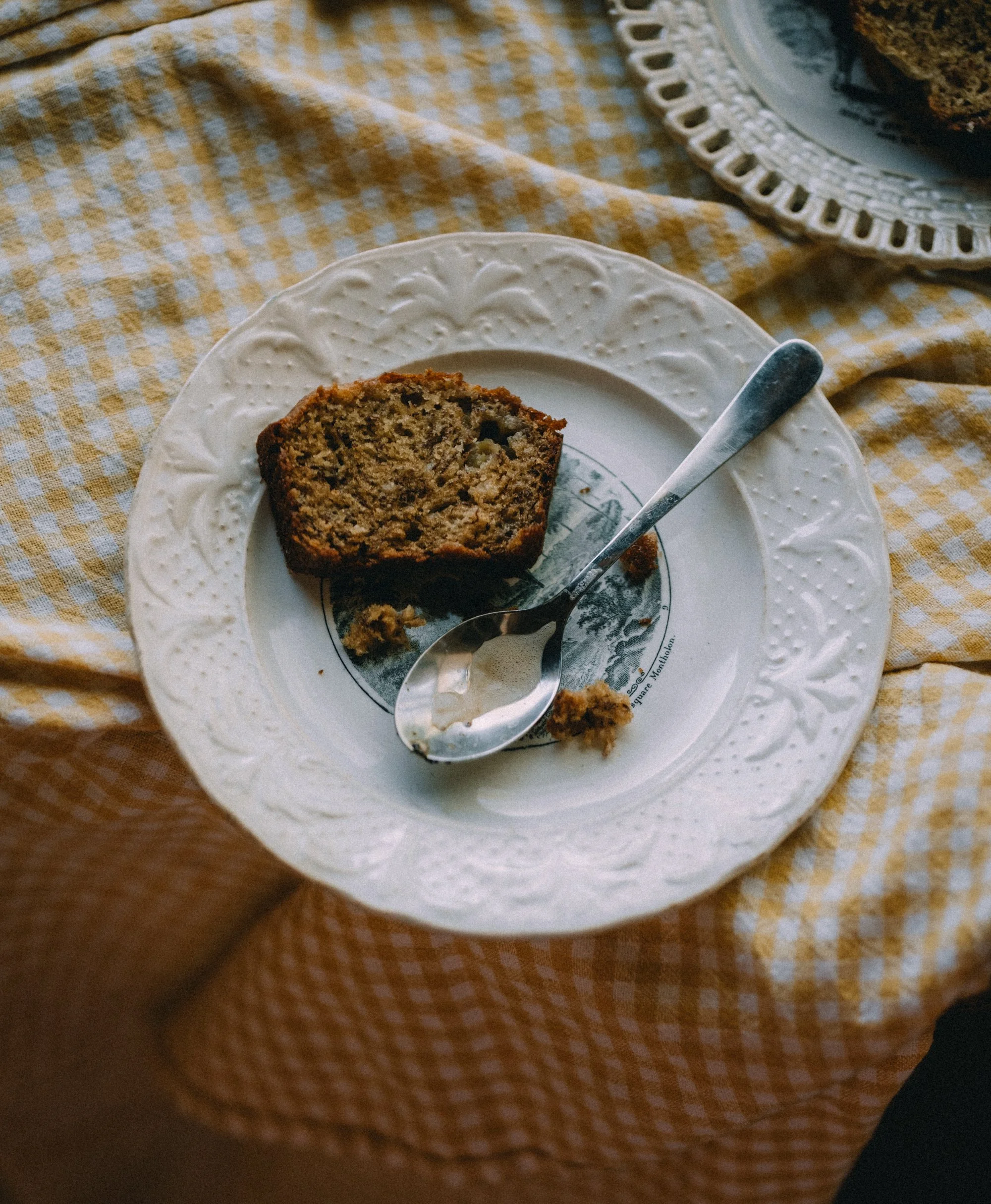
Cake and Conversation - The Heirloom Way
There is an hour in the European afternoon that Americans mostly work through. In Germany they call it Kaffee und Kuchen — coffee and cake — and it arrives somewhere between three and four o’clock, as reliably as the light changing. This was my favorite thing about living in Germany for many years, being invited or inviting people over to just enjoy conversations and really good cake.
The Swedes have fika, which is less an event than a verb, a thing you do with another person. The French give their children le goûter after school, bread and chocolate at the kitchen table.
What all of these share is not the cake.
It’s the stopping. It is the idea of making room for conversation in the middle of the day surrounded by friends and enjoying something on the sweeter side.
The afternoon pause is a small act of resistance against the idea that a day should be spent entirely in production. You set down the work not because it is finished — it is never finished — but because the hour has come, and the hour matters more.
A slice of something, a cup of something, a person across the table or a window to look out of. Twenty minutes. That’s the whole tradition. I think about this often in my own studio. The plaster doesn’t care if I rest. The flowers wait. And the work I return to afterward is almost always better for the leaving of it. Life expands during this time and it makes a huge difference.
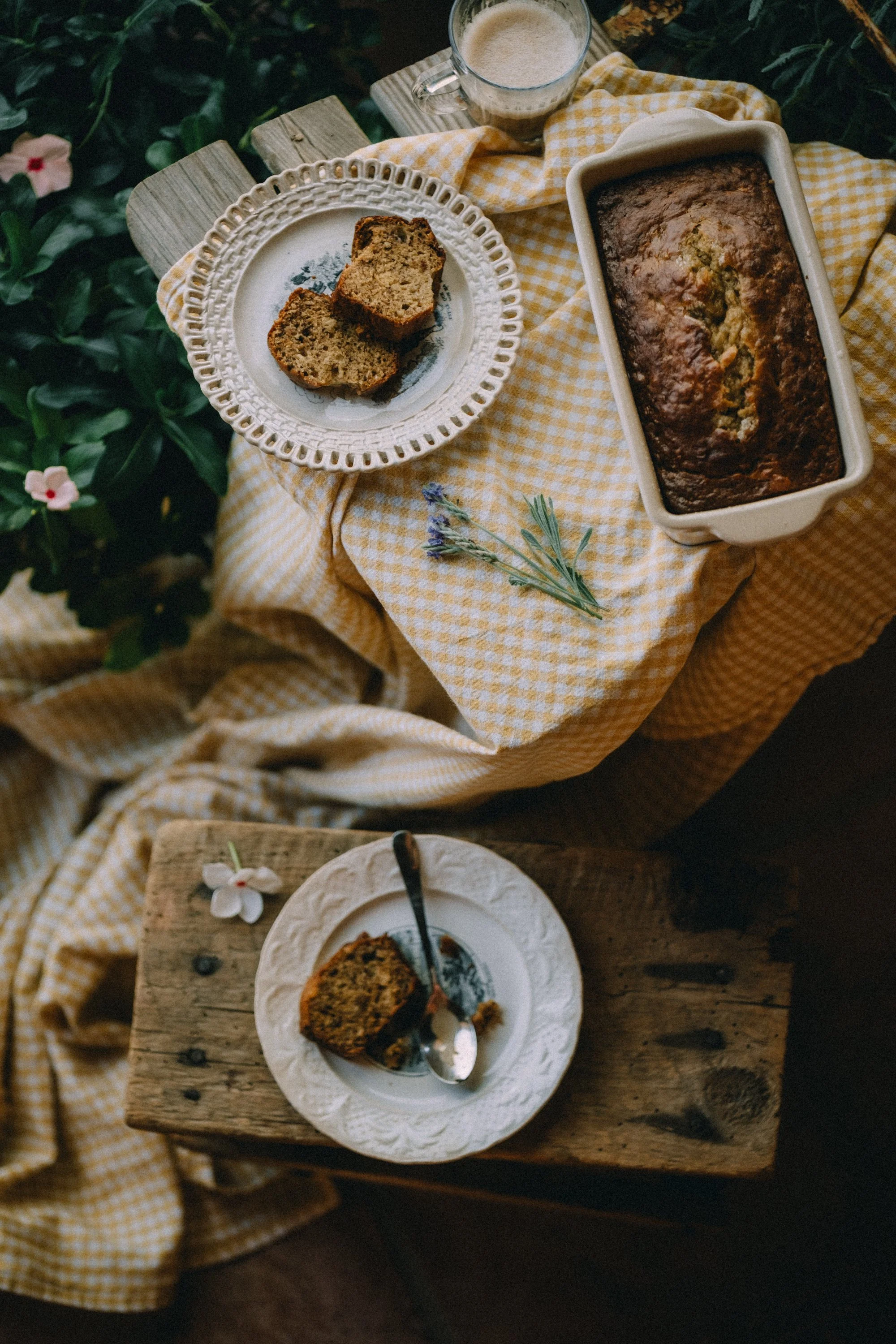
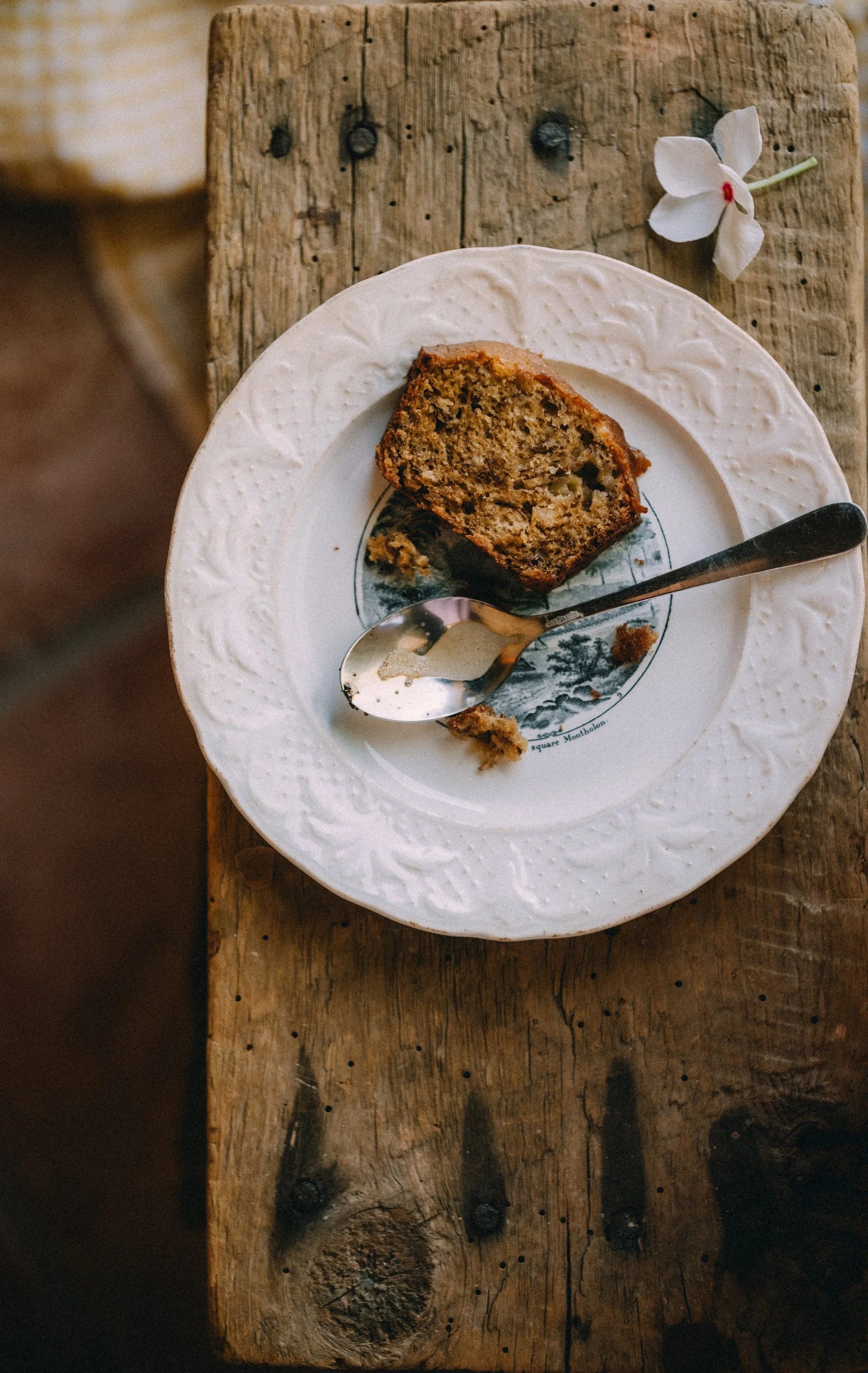
Start with the table. Clear it fully — the afternoon pause deserves an empty surface, not a cleared-enough one. A cloth if you have one, even a linen tea towel laid on the diagonal.
This is the moment for the dishes you save: the gold-rimmed cups from your grandmother, the small plates you bought and never use because they felt too precious. They were made for exactly this. Precious things kept in cabinets are just inventory. The cake itself should be humble. This is important. Kaffee und Kuchen is not a patisserie tradition — it is a home tradition. A simple pound cake, a plum cake in late summer, an apple cake that slumps a little in the middle, shortbread, a good bakery loaf sliced thick. One kind is enough.
Abundance here is measured in time, not variety. Coffee in a pot, not a mug filled at the machine. The pot matters because it implies a second cup, and the second cup implies you’re staying. Tea works just as well. So does chocolate in winter.
And then, {this is the hard part for me} nothing else. No phone at the table (duh). No laptop nearby with its lid half-open like a held breath (double duh). The Europeans understood that the ritual only works if it is sealed off from the day around it. What to talk about The four o’clock table has its own compilation of conversations. It is not the dinner table, where the day gets reported, and it is not the morning table, where the day gets planned. It sits outside of usefulness, which is exactly why the best conversations happen there. Some places to begin, if you’re sitting with someone and the silence needs a door:
What’s something you noticed this week that no one else seemed to see? — the small observations that never make it into ordinary conversation because there’s never a pause long enough to hold them.
What did afternoons look like in your childhood home? Almost everyone has an answer to this, and almost no one has been asked.
What’s something you’re slowly getting better at? Not achievements — the quiet, incremental things. Bread. Patience. A language. Letting go of something.
If you could keep one hour of the day and give the rest away, which hour would you keep? What’s a smell that stops you in your tracks?
And if you’re alone — which is a perfectly legitimate way to keep this hour — bring a notebook instead of a book. The book will pull you out of the room. The notebook keeps you in it.
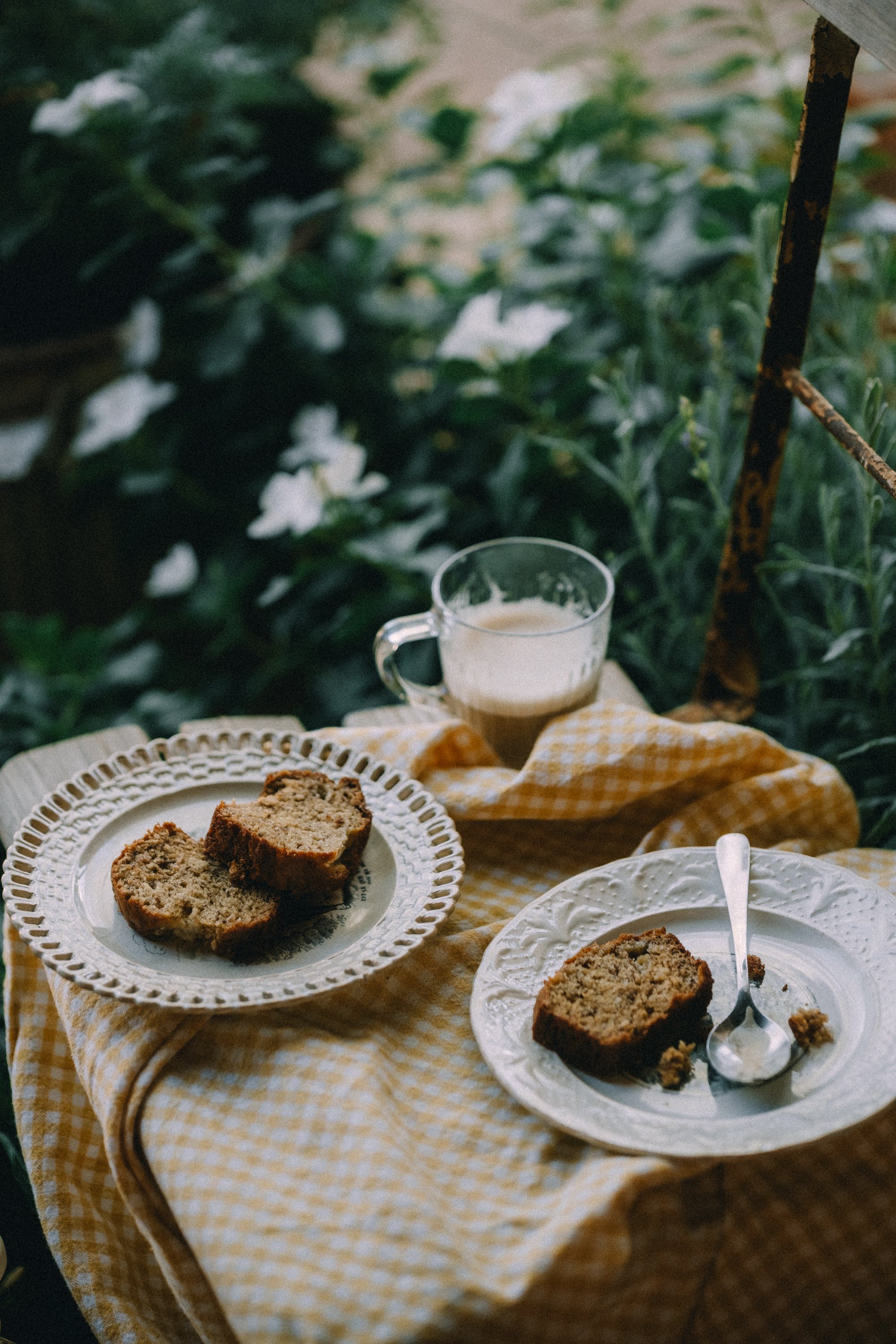
Just begin. Even if it is not perfect.
The mistake is waiting until you can do it beautifully.
The Germans having Kaffee und Kuchen on a Tuesday are not styling anything. The cake is from Saturday. The tablecloth has a stain from the last time. The ritual survives precisely because it doesn’t demand perfection — it only demands the stopping. So this week, once: three o’clock, the good cups, something sweet, and twenty minutes that belong to nothing.
The work will wait. It always does.
So, what are you making this coming week? And who are you inviting? I wish I could invite you to my table, but this will do for now.
Jocelyn x
p.s. I am sharing the recipe in the button below. have fun!
p.s.s. the French talking plates are a part of my portfolio so if you are interested in them please let me know via email.